
Chantal and I had a few days to explore Medellin before she returned to Canada. We decided our first tourist site should be the Museo de Antioquia. I was a fan of the bronze Boetero statues that I had seen in Cartagena and excited to see more.We looked at the map and thought we could walk from our hotel (61Prado) to the town square. The distance was not far. As we started walking, we got turned around a few times and lost our direction. At one point, a man walked up and told us it was not a safe neighborhood and insisted we take a taxi for our own safety. We obliged and were at the Plaza de Batero quickly. Taxis are cheap here and use their meters. I really like not having to negotiate the price.
The Museo de Antioquia is filled with Fernando Botero paintings and statues. I knew little about his work when I arrived in Colombia but I was enthralled with the bright colors and voluptuous figures. I appreciated his artwork and realized they were not just fat people that he was trying to portray. He was making a statement about politics and life of the everyday Colombian. Botero exaggerated the size and colors of his subjects to add life and sensuality to them.

Chantal and I spent longer than we had expected at the museum. We loved the paintings and sculptures. Botero painted the lives of the Colombians and current events, including Pablo Escobar's death.

One of the more intriguing pieces was a gun-guitar. I can not remember if this was an AK-47 or what type, I am not a fan of guns or violence. But I was intrigued with the artists combination of two very prevalent parts of Paisa history- music and violence.

Chantal and I spent an afternoon in the Plaza Botero and watching the locals and tourists before returning to our hotel for a delicious filet mignon dinner.....and only $7.50!!! The beef was cooked perfectly with a fresh dinner salad and mashed potatoes. It was mouthwatering and the best meal I had eaten in several weeks. Unfortunately, Colombia is not known for its food. They have some delicious soups and I am a fan of the patacones (fried plantains) and juices but there is room for improvement in the culinary side if travel. But I will keep trying new foods. Why stop now? It is part of travel.
The next day we decided to take the metrocable car to Parque Avri. The Medellin metro system is one of the best in the world. It is clean, safe and cheap. The cable car system swept us over the cities poor neighborhoods (favelas) while young paisas told us about their city and flirted with the young girls in the car behind us.

For a couple dollars, we rode the subway and then transferred directly to the metrocable.

The cable cars whisked us away from the city with beautiful views of the valley.

It stops in a mountaintop nature reserve, Parque Avri, giving the residents easy access to weekend recreation. There are several options - camping, hiking, biking and horseback riding. We went for a hike to explore the area. It was beautiful and the air was fresh. I felt like I was a million miles from the city, not a 10 minute cable car ride.

After our hike, we returned to the farmers market. Locals were selling fresh fruits and vegetables, handmade scarves, ponchos and hats and fried foods.

I bought a cup of fresh strawberries, blackberries and gooseberries. Fresh delicious berries for $1! Yummy!

Afterwards, we celebrated with chocolate dipped strawberries for Valentines day! I was shocked...3 for $1! So cheap!! I have no problem treating myself for Valentines Day!

On our return to the city, we stopped to look out at the Parque Biblioteca Espana (Spanish Library). It was under construction and covered with large tarps so we did not walk over. This is a landmark project, a beautiful architectural design for a library built in an area where Pablo Escobar's drug cartel recruited assassins. The city decided to build this library in the middle of the slums and to make it beautiful. Why? This was to allow the local people to identify with the beautiful design and love their library and the opportunities it provided. They wanted to put an emphasis in education, opportunity and art in the middle of a poor neighborhood. The goal was to create pride and love in each citizen's neighborhood and the city of Medellin. School children in Medellin are taught from a young age to be proud of their city and the beauty surrounding them. The citizens participate and feel they are involved in the construction, design and approval of public programs. I was amazed as I explored the city. Recycling bins were present. Little to no trash in the metro, parks or streets. People were proud of their city. The Colombians frequently asked what I thought of Colombians and their city. They beamed with joy when I told them how much I loved their city and country. I usually got a hug as I explained how nice the people of Medellin are to the tourists. It was evident the paisas loved their city and the public programs were working. Crime and murders have reduced significantly. I was amazed by the exceptional and innovative measures the people of Medellin have taken to transform their history and the future of their city.
The next day, Chantal packed her bags, we said our goodbyes and she flew back to Canada. I was going to miss my sweet friend and all the fun we had over the past 2 months. But, I have a journey to complete. Bye Skittles and your rainbow of color!

The next day, I decided to explore Medellin's free botanical park. Yes, free! Each time I find beautiful spaces in this city, I am shocked and amazed. The park is full of paths with beautiful flowers and trees. I walked the area and enjoyed being in nature. I stopped along the lagoon to watch the feisty iguanas.
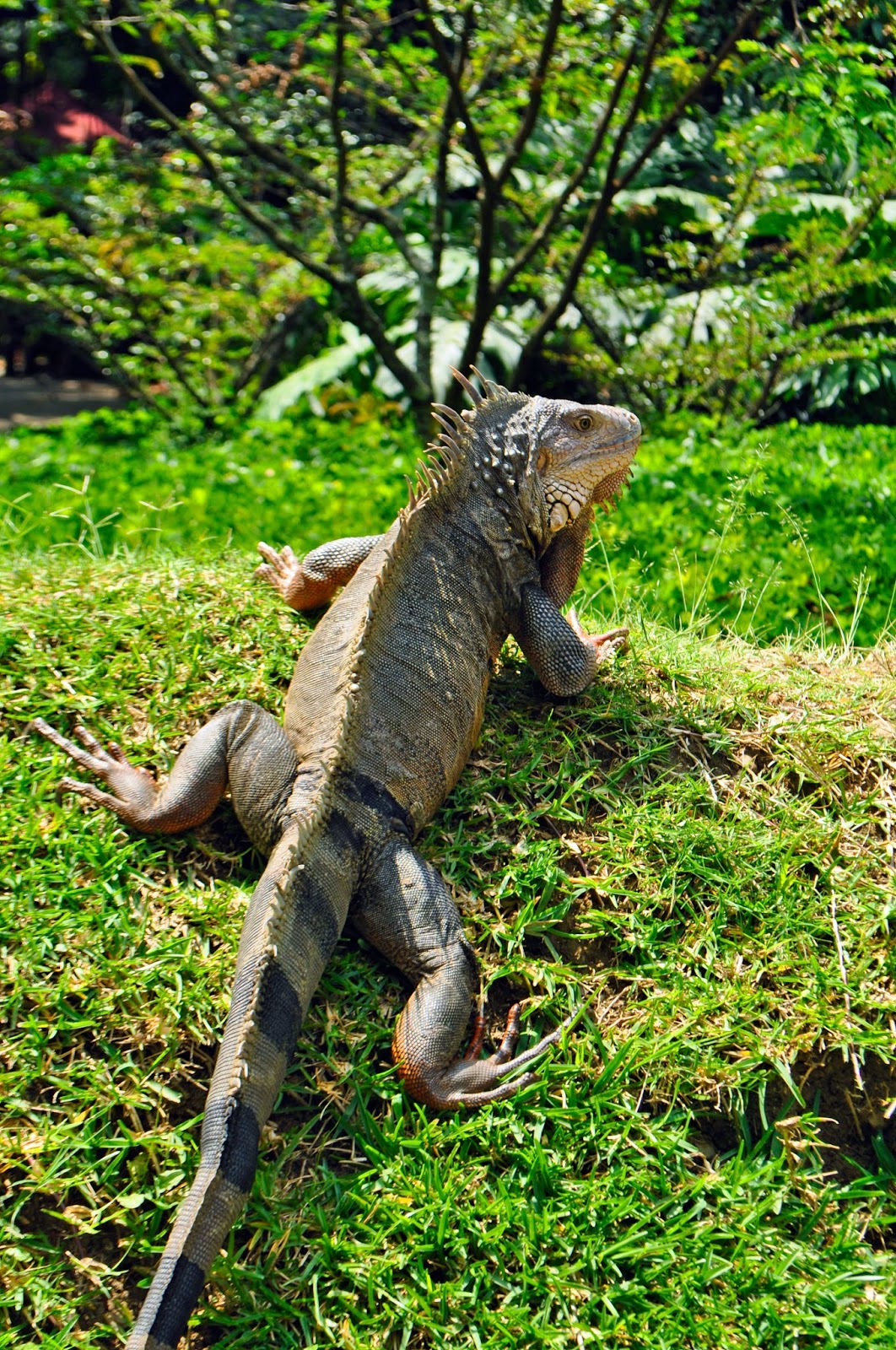
Most were sunning themselves along the lake but a few came towards people wanting a snack. Not my type of pet. I will stick to the dogs, I like the warm blooded pets with fur! I continued walking along the paths to the butterfly house. It was filled with flowers and butterflies.

As I left the park, I walked back to the metro and stopped for a coffee at a local café. I love relaxing and watching the people. I could spend hours with a good book and a café just enjoying life.
I signed up for the Real City Tours Exotic Fruit Tour of the market. Why not? A great way to enjoy a the local fruits and learn the names. It was a small (5) group of us that walked through the markets.

We started at the outskirt of the market which had all the local wares, pets and farm animals. In Colombia you can buy anything you want. They recycle everything. We walked through stalls of dolls, fans, Amway products, TVs, remote controls and used toilets. If Colombians do not want it, then it is sold to a person that will clean it up and re-sell the items. If you have a broken fan, there is a shop to buy the piece you need. I was amazed at this part of the market. I realized how we are a disposable society in the USA. Many people want the newest and latest things and get rid of the old. Not in Colombia! Due to many people only earning $300-400/month they repair and use things as long as possible. I made a mental note to be better at recycling and buying items that can be repaired.

Our guide warned us before we walked through the animal section. If anyone did not want to see animals in cages we could stay back and meet the group on the other side. It was a nice offer but we all wanted to see the animals. Chickens, ducks, parrots, cats and dogs were all for sale. You name it, it was there. Our guide told us last week there was a llama for sale! Why not?!? I was a sucker for the puppies and started to play with a cute little guy. He cost about $35. I hoped he would find a home soon!
Afterwards we walked to the fresh fruit and vegetable market. It was large and I was excited to get started tasting the exotic fruits of Colombia. Hernan handed out napkins, gloves and spoons to each of us and we started walking. We tried so many delicious fruits. We tasted peach palm, tree tomato, Spanish lime, gooseberries, yellow passionfruit, guavasteen, guama, pitahaya (dragon fruit), guanabana, guava, sapote, passion fruit, starfruit, prickly pear, mangosteen, lulo, banana passion fruit, sweet granadilla and algarroba (stinky feet). The largest and most interesting was the one that looked like a dinosaur egg, the guanabana. It had little pods with large seeds. I popped it in my mouth and it had a delicious juicy acidic citrus flavor with the texture of gum. The fruit dissolved and left a large seed to spit. I liked it but it was messy to eat. I found myself thinking it would be delicious as a juice with some tequila.

My favorite was the sweet granadilla. I cracked the orange sphere like an egg and opened it. It has large seeds and looked a little like boogers. I took a scoop and my first inclination was to chew the seeds. They are crunchy and taste fine. Our guide suggested we compare the flavor of chewing the seeds to swallowing a portion the seeds whole. The granadilla was sweeter when the seeds were swallowed whole. Yummy! I was going to eat more of these.

The worst fruit and the only one I could not eat was the algarroba. The smell was disgusting...it was like sweaty, stinky feet. I was brave and tried the velvety fruit but I could not get past the smell. It was awful. I dumped that one in the garbage quickly!! The tour was fun and a great experience. I was armed with the knowledge of the fruits and ready to try a few fruits and fruit juices over the next few months of my travels. Mmmmm.
The one last thing I wanted to do was visit the escalators in Communa Trece. Hernan, our fruit tour guide, gave me directions and assured me it was safe to visit the escalators. I left the market and walked to the San Antonio metro stop where I took the line B metro to the San Javier stop and switched to the 101 bus to the end of the line. A short walk and I arrived at the escalators. This the poorest and once the roughest slums of Medellin. The slums were built on a steep hillside where residents climbed 300 steps every day, all of their groceries and any purchased items. The area was too steep for cars. The city of Medellin built a seven-station outdoor escalator which runs through the heart of the community. The project took two years to complete and cost $5 million.

The escalators, runs 18 hours a day and are covered to protect the residents from rain. This area transformed the slum providing easy access to the metro station, shopping and the job market.What an innovative approach to make the commute easier for the residents. These are the tings Medellin has done to improve the quality of life in the city. I loved it!
Medellin is by no means a perfect city. Its murder rate has fallen significantly (80%-90%) since the Escobar cartel days. Many people still live in poverty. The education system needs improvement and the country is growing and changing. But there is an undeniable sense of optimism and pride that the city seems to be on the right path. I love Medellin for all it has done to help the poor people and to improve the quality of life in the city. I did not have time to attend a soccer game but I heard they had 2-for-1 ladies night, the sports arena has 5 pools for use by the public for a couple dollars and the theater had free tickets. The love for the arts, sports and education make this an exceptional city that I can not wait to visit again. In my heart, yo soy paisa!


